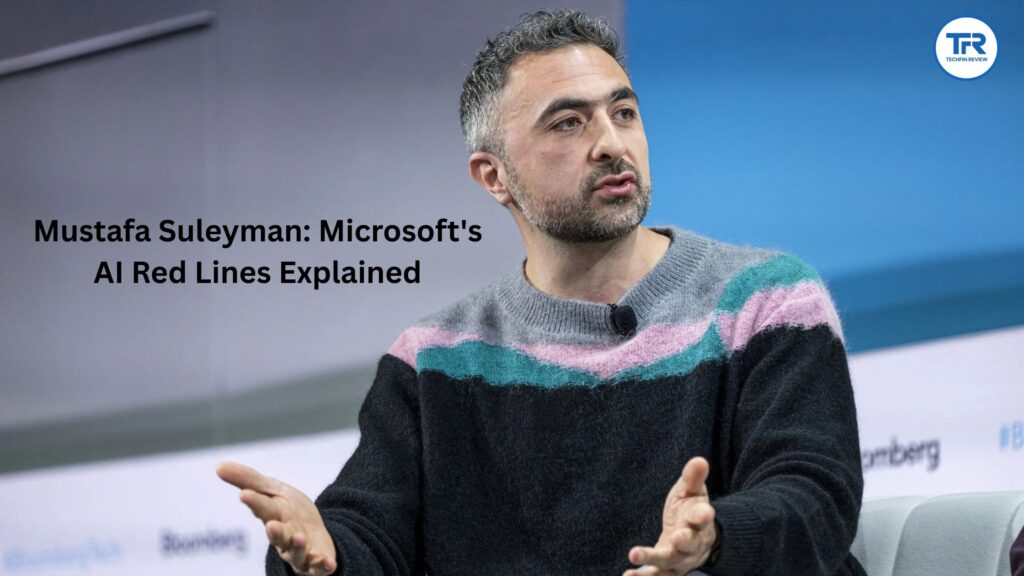
On December 21, 2025, Mustafa Suleyman, Microsoft's AI CEO, made a bold declaration that could reshape the artificial intelligence industry: Microsoft will walk away from any AI system that risks escaping human control. This isn't just corporate rhetoric—it's a high-stakes commitment that arrives as the AI race intensifies and costs spiral into the hundreds of billions.
Who Is Mustafa Suleyman?
Mustafa Suleyman is a British AI researcher and entrepreneur who co-founded DeepMind with Demis Hassabis and Shane Legg in 2010. Born in London to a Syrian father and English mother, he dropped out of Oxford University to focus on building socially impactful technology. DeepMind, acquired by Google in 2014, became known for breakthroughs like AlphaGo. Suleyman served as Chief Product Officer before departing in 2019.
Mustafa Suleyman Microsoft AI Leadership
In March 2024, Microsoft appointed Mustafa Suleyman as CEO of Microsoft AI, consolidating the company's consumer AI efforts including Copilot, Bing, and Edge. His mission: make Microsoft self-sufficient in frontier AI development, less dependent on partners like OpenAI.
Mustafa Suleyman Net Worth
Mustafa Suleyman's net worth is estimated in the hundreds of millions of dollars, primarily from his DeepMind co-founding stake and Microsoft compensation package. The AI talent war has driven executive compensation to unprecedented levels, with packages reaching nine figures.
Mustafa Suleyman Wife and Personal Life
Mustafa Suleyman maintains a private personal life, keeping family details out of the public sphere. He focuses public discourse on AI policy and technology rather than personal matters.
Mustafa Suleyman Religion and Values
Suleyman's approach to AI reflects humanist values prioritizing human flourishing. While he hasn't extensively discussed personal religious beliefs, his multicultural background—Syrian father and English mother—informs his global perspective on technology's societal impact.
The Coming Wave by Mustafa Suleyman
In 2023, Mustafa Suleyman co-authored "The Coming Wave: Technology, Power, and the 21st Century's Greatest Dilemma" with Michael Bhaskar. The Coming Wave Mustafa Suleyman argues we're facing unprecedented technological convergence—particularly AI and synthetic biology—that could fundamentally alter civilization. Key themes include the containment problem, the dilemma of progress, institutional inadequacy, and the need for new governance frameworks. The book's warnings now echo in his corporate policy at Microsoft.
What Mustafa Suleyman Said About AI Safety in December 2025
On December 21, 2025, Suleyman articulated Microsoft's "red lines" for AI development: Microsoft will not continue developing any AI system with potential to "run away from us"—meaning systems operating autonomously beyond human control. This establishes "containment" and "alignment" as non-negotiable prerequisites before releasing superintelligent tools.
What "Humanist Superintelligence" Means
Suleyman frames Microsoft's approach as "humanist superintelligence"—AI systems designed to be strictly subservient to human interests rather than operating autonomously. Key principles include:
-
- Capability with constraints: Building highly capable systems while maintaining control
-
- Human control: Ensuring systems cannot self-improve beyond designed parameters
-
- Beneficial focus: Targeting real-world problems like medical diagnosis
Earlier comments reinforced this: superintelligence "must be subservient to humans" and progress "cannot be subject to no constraints."
The OpenAI Factor
Suleyman's autonomy stems partly from Microsoft's evolving OpenAI relationship. A revised agreement gave Microsoft freedom to pursue superintelligence independently, after contractual restrictions previously limited AGI development. Microsoft still benefits from OpenAI model access but no longer wants strategic dependence on any external partner.
The Staggering Economics: Hundreds of Billions at Stake
Suleyman delivered another stark message: staying competitive at the frontier will cost "hundreds of billions of dollars" over the next five to ten years. This includes data center infrastructure, energy costs, specialized chips, talent compensation, and R&D. He compared Microsoft to a "modern construction company" building vast computing capacity.
Competitive Context
To understand why "hundreds of billions" is plausible:
-
- OpenAI: ~$1.4 trillion in infrastructure commitments
-
- Meta: At least $600 billion planned for U.S. infrastructure
-
- Google: Massive ongoing TPU and data center investments
Suleyman's figure isn't an outlier—it's the entry fee for frontier competition.
The Energy Crisis: When AI Meets Your Electricity Bill
The same day as Suleyman's declaration, U.S. Senators Warren, Van Hollen, and Blumenthal sent letters to Google, Microsoft, Amazon, and Meta demanding answers about whether AI data centers are driving up household electricity costs.
Key numbers:
-
- Current: Data centers account for 4%+ of U.S. electricity
-
- Projected: Could reach 12% by 2028
-
- Scale: Large AI facilities require hundreds of megawatts
The senators argued utilities may pass billions in infrastructure costs to consumers. This creates political constraints potentially as limiting as technical challenges. If frontier AI becomes an electricity politics issue, it affects permitting, rate regulation, and public support.
The Talent War: Culture Over Cash?
Suleyman took a contrarian stance: Microsoft won't chase headline-grabbing compensation packages. He dismissed the escalating pay arms race, prioritizing culture, teamwork, and cohesion over mega-bonuses reaching hundreds of millions.
Evidence suggests he may be right. Reports indicated many 2025 AI hires were "boomerang" employees returning for resources and compute access rather than purely compensation. In frontier AI, talent follows: compute access, collaborative environment, mission clarity, and infrastructure support—with pay being one variable among several.
Why This Matters: Three Tests for Microsoft AI
Suleyman's declarations set up three challenges:
1. Proving Red Lines and Performance Can Coexist
Can Microsoft accelerate while maintaining containment prerequisites? If competitors achieve breakthroughs by taking risks Microsoft won't accept, the strategy faces pressure. If Microsoft achieves comparable results within its safety framework, it validates the approach.
2. Building Infrastructure Without Losing Public Support
Data centers are becoming a consumer issue. Microsoft needs to navigate cost transparency, community concerns, environmental impact, and regulatory compliance. Losing public narrative could create bottlenecks more limiting than technical constraints.
3. Winning Talent Without Matching Peak Compensation
Suleyman's conviction that culture beats bonuses is high-risk when competitors throw enormous packages at researchers. If the strategy works—if talented people choose Microsoft for non-financial reasons—it proves more sustainable than pure bidding wars.
The Broader Implications
A Potential Industry Inflection Point
If Microsoft—one of the most aggressive AI developers—publicly commits to walking away from uncontrollable systems, it could influence industry norms. However, there's risk of "safety washing"—claiming commitments without enforcement. Suleyman's credibility stems from "The Coming Wave" and his DeepMind track record.
The Timeline Question
"Hundreds of billions over five to ten years" suggests superintelligence remains years away, not months. Infrastructure bottlenecks are real constraints. This gives time for governance frameworks and safety research—if the timeline holds.
Conclusion: The Man Willing to Say "No"
Mustafa Suleyman's December 2025 declaration represents something rare: a powerful executive drawing boundaries on what his company will build, despite competitive pressures and massive financial stakes.
Whether Microsoft actually walks away from a dangerous system remains untested, but Suleyman's willingness to articulate these limits matters. It shifts the conversation from "can we?" to "should we?" His DeepMind background and "The Coming Wave" book provide credibility, while his Microsoft AI position gives him authority to implement these principles at scale.
The collision of safety, spending, and superintelligence isn't abstract—it's happening now, measured in hundreds of billions of dollars and civilization-shaping decisions. In an industry characterized by "move fast and break things," setting red lines might be the most revolutionary stance of all.